| Posted By |
Discussion Topic:
Help! Running on 4 cylinders
-- page:
1
2
3
4
5
6
|


|
 chask
chask |
 06-09-2017 @ 5:40 PM
|
|
|
|
Member
Posts: 48
Joined: Feb 2017
|
Hi all, I am a newbie to the world of antique vehicles and the ford flathead. I recently retired and was looking for a project to keep busy and boy did I find one. I purchased a 1937 Ford pickup in January from an antique car dealer and am having problems with the engine. The Truck has what I think is a 1941 Flathead V8 (it has the raised intake manifold and helmet distributor). The engine is running rough and seems to be running on 4 cylinders and is difficult to start. It is also making a clanking sound my wife says sounds like a horse clop. I have installed a re-built model 94 Carburetor from Charlie NY and had the Distributor checked out by Charlie NY. (Many thanks to Charlie. He went above and beyond and even had me send the carb and distributor back to him to re-verify on his engine that they were OK, which they were.)
Here is what I’ve found so far: I pulled off the spark plug wires one at a time and found no change in engine speed when 3, 4, 5 and 7 were pulled. 1, 2, 6 and 8 caused the engine to slow when pulled. It seems like it is running on 4 cylinders. All 8 wires when pulled have strong blue sparks. I have tried changing back to the original coil and spark plugs with no change. There is no backfiring at all either thru the exhaust or thru the carburetor.
Checked compression both hot and cold and readings are:
Cyl 1 - 110
Cyl 2 - 105
Cyl 3 - 110
Cyl 4 - 115
Cyl 5 - 115
Cyl 6 - 105
Cyl 7 - 105
Cyl 8 - 100
I also looked at each valve thru the spark plug hole while cranking and all valves that I can see are moving (None stuck??). Can't see both valves on Cyl 4 and 8.
Checked intake manifold vacuum and gauge fluctuates rapidly between 7-12 to 16 inches Hg.
It will run on 4 cylinders and stops making clanking, clopping, noise when I disconnect #1 spark plug and run on 3.
Here is the complete list of things I’ve done so far:
Purchased Re-built Model 94 Carburetor from Charlie NY in March 2017.
Sent Helmet distributor to Charlie NY to check. He adjusted timing and replaced condenser, all other parts good.
Installed new NGK B4L spark plugs (Also tried going back to old ones with no change)
Installed new coil from NAPA P/N ECH IC7 (Also tried going back to original with no change)
Installed new spark plug wires from Joe’s Antique Auto (Also checked by Charlie)
Dropped the gas tank and cleaned out minor rust and flushed (Sat empty for 4-5 weeks before refilling)
Installed new copper coated steel gas line from Joe’s
Installed new gas filter at the tank before the electric fuel pump and one after the mechanical pump (still has mechanical pump at the engine)
Changed oil and added Marvel Mystery oil in crankcase (1 Qt to 3 Qts oil)
Added Marvel Mystery oil to gas tank.
Added Berryman B-12 to carburetor and to gas tank.
Any ideas out there as to the cause or other tests to try. I don't understand the good compression readings with bad valves but what do I know. I am in New Jersey so if anyone knows of a local flathead expert please let me know. I am OK with removing the intake manifold and heads to look around but have limited knowledge and tools for performing a valve job. (although I’d like to try)
Thanks,
Charlie Knarr
1937 Ford 1/2 ton pickup
New Jersey
|
|
JayChicago |
 06-09-2017 @ 7:27 PM
|
|
|
|
Senior
Posts: 555
Joined: Jan 2016
|
Your symptoms make me think of incorrect firing order, especially when you say the horse-clopping noise goes away when you pull one plug wire. Did Charlie NY check your new wires as installed in the distributer caps? If so, are you then confident you have the wires going to the correct cylinders?
|
|
pauls39coupe |
|
06-09-2017 @ 7:49 PM
|
|
|
|
Member
Posts: 247
Joined: Jul 2014
|
Use a vacuum gage to help trace this one down. You may have a leak in the intake manifold affecting 1/2 the engine. If you have an aluminum intake they were known to develop holes up top or on the bottom, inside the lifter galley.
Check your distributor caps and be sure the firing order is correct. make sure the caps are firmly in the notch in the distributor
The clanking noise could be related to the fuel pump pushrod, incorrect length or a failing pump. Cast iron and aluminum intakes used different length fuel pump rods, and various fuel pumps were used over the years.
Let us know what you find.
|
|
chask |
|
06-10-2017 @ 3:09 AM
|
|
|
|
Member
Posts: 48
Joined: Feb 2017
|
Thanks for the reply, The distributor wiring was checked out by Charlie NY. I sent him the distributor with all the new wires attached and he put it on his engine and it ran fine. He said it was wired correctly as received. He has been a great help in sorting thru this and I am sure now the carb and distributor are good as both were installed on his engine and ran fine.
Thanks,
Charlie Knarr
1937 Ford 1/2 ton pickup
New Jersey
|
|
chask |
|
06-10-2017 @ 3:46 AM
|
|
|
|
Member
Posts: 48
Joined: Feb 2017
|
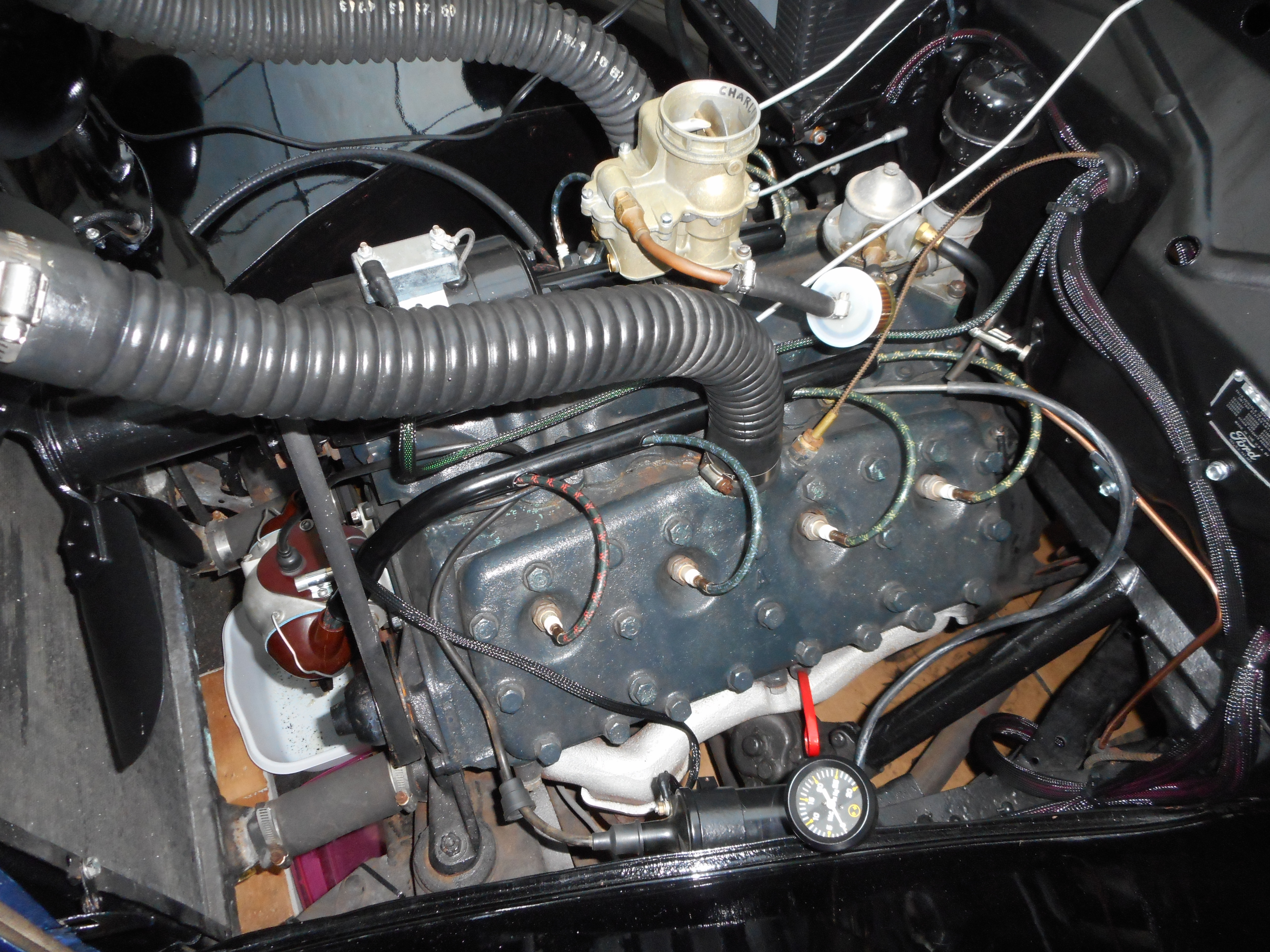
Checked intake manifold vacuum and gauge fluctuates rapidly between 7-12 to 16 inches Hg. It runs 7-12 with all cylinder plug wires attached and jumps to 7-16 when #1 plug wire is pulled. The engine is mostly stock and the intake manifold is cast iron. The clanking stops when #1 plug is removed so I don't think the fuel pump rod would be the cause since it should still be moving. To check for leaks in the intake manifold I have read to use propane (not lit) and slowly move around the intake to see if the engine speed increases. If it does it pinpoints the leaky area. Sound like a good plan??? I will try to attach photo of the engine.
Thanks,
Charlie Knarr
1937 Ford 1/2 ton pickup
New Jersey
|
|
pauls39coupe |
|
06-10-2017 @ 7:57 AM
|
|
|
|
Member
Posts: 247
Joined: Jul 2014
|
Charlie, from what you describe your vacuum readings indicate a weak or broken valve spring and/or loose valve guides. You may have lost the horse shoe clip which holds the guide in place, with split guides this could cause the guide to move around and the spring to loosen.
Yes using a propane torch or carb cleaner works to check vacuum leaks. Be carful using any flammable products around a hot running engine. Things can go boom in a bad way!
One last thing, firing order on a flathead starts with #1,2,3,4 on the passenger side 5,6,7,8, on the drivers side. Those of us who grew up on brand X cars this is a change in thinking.
|
|
chask |
|
06-10-2017 @ 9:03 AM
|
|
|
|
Member
Posts: 48
Joined: Feb 2017
|
Pauls39coupe,
Thanks for the info. Sounds like the best option is take off the intake manifold to look at the springs and guides then take it from there. Is it possible to replace just the springs and guides or does a complete valve job need to be done. I don't have the tools to lap and polish the valves but the springs and guides should be doable.
The firing order was my first guess when this problem showed up but turns out I had all the wires correct and was aware of the firing order. I spend a lot of time on the forums learning about the flatheads so it's been fun even with all the problems. Believe it or not I'm looking forward to looking into the workings of the engine even if I end up having someone else perform the work.
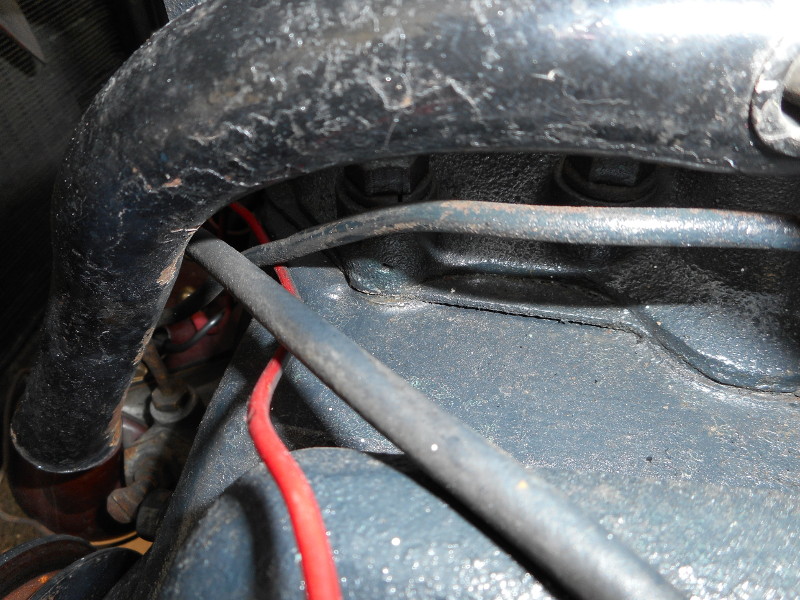
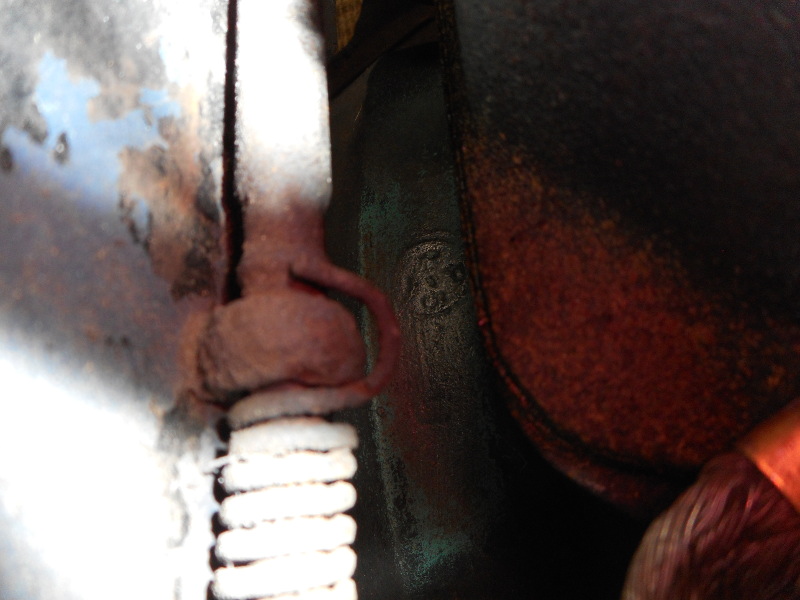
Attached is a picture of the "raised" intake manifold that is leading me to believe it is a 1941 Engine. Any comments? I haven't figured out how to post multiple pictures so doing them one at a time. I also have a picture of a strange circular stamp on the bell housing that has a "P" and a "5" with some other markings I can't make out. I have been unable to verify what the stamp means. Rebuilt? After market block?
Thanks again for your help!
Thanks,
Charlie Knarr
1937 Ford 1/2 ton pickup
New Jersey
|
|
chask |
|
06-10-2017 @ 10:24 AM
|
|
|
|
Member
Posts: 48
Joined: Feb 2017
|
Here is the marking on the bell housing of engine. I can't find any info on this stamp and there are no other stamping on the bell housing. I want to be sure it is a 1941 so if I find I need parts I can get the right ones.
Thanks
Charlie
Thanks,
Charlie Knarr
1937 Ford 1/2 ton pickup
New Jersey
|
|
TomO |
|
06-10-2017 @ 11:03 AM
|
|
|
|
Senior
Posts: 7385
Joined: Oct 2009
|
There seems to be no correlation between the failing cylinders and the ignition or fuel delivery system, so it would seem to be something that affects certain cylinders.
First I would check the strength of the spark. The coil that you have has an internal resister and the resister under the dash should be bypassed. The coil should be installed with the + connector connected to the adapter plate connection for the lead of the condenser. There should be at least 6.0 volts at the input to the coil with the ignition on and the engine not running.
Remove one of the plug wires from a failing cylinder and hold it close to a head nut with the engine running. The spark should jump about 1/2" and be blue in color. Am orange spark is weak.
If you have good spark and the spark plugs are clean, the next step would be to check out the intake manifold for an obstruction. I have heard that some people have had success using a vacuum cleaner to clean the passages without removing the intake.
You could also have leakage between the 2 runners. It is possible for the intake to rust through. You would have to pull the intake manifold and inspect it to determine if this is your problem.
Tom
This message was edited by TomO on 6-10-17 @ 11:07 AM
|
|
chask |
|
06-10-2017 @ 1:35 PM
|
|
|
|
Member
Posts: 48
Joined: Feb 2017
|
Hi Tom,
Thanks for the comments. The spark on all cylinders is blue and jumps about an inch. The resistor has been removed and new and old coils and spark plugs have been used with no change. The distributor and with wires still attached were also verified on another engine along with the carburetor and performed perfectly. Based on that it does seem to be something with the intake manifold or valves.
Your comment on a clogged intake manifold or a hole between the two runners is definitely a possibility I didn't think of. It's behaving like gas isn't getting to the non-firing cylinders since the plugs in those cylinders stay very clean and they are getting spark. It looks more and more like I need to pull the intake and see what is going on in there.
Thanks again for the help!
Thanks,
Charlie Knarr
1937 Ford 1/2 ton pickup
New Jersey
|




 Reply to Discussion